


How Market Volatility Affects Your Open Positions
Volatility isn't just a number — it directly impacts your losses and gains. Learn how price swings affect your positions and why understanding this matters before you trade.

What Is Volatility, Really?
You've probably heard traders mention volatility like it's some kind of enemy. But here's the thing — volatility is just the measure of how much a price moves around. When markets are quiet, volatility is low. When they're jumping all over the place, it's high.
The crucial bit? Volatility directly affects your money. If you're holding an open position and the market suddenly swings 5% in either direction, that's your P&L moving in real time. Understanding volatility means you'll know what to expect and how to prepare.
Why This Matters
- Volatility determines how fast your position can move against you
- Higher volatility = larger potential gains AND larger potential losses
- You can't control market movements, but you can control your exposure
- Planning for volatility is planning to survive
How Volatility Impacts Your Positions
Let's say you're holding a position worth £10,000. In a calm market with 8% annual volatility, you might see daily moves of £30-50. But if volatility spikes to 25% — which happens more often than you'd think — those same moves become £80-120 per day. That's real money swinging around.
The bigger your position size relative to volatility, the more dramatic the swings become. A £50,000 position in high volatility can lose £2,000-3,000 in a single session. Most traders aren't psychologically prepared for that, which is why they panic sell at the worst times.
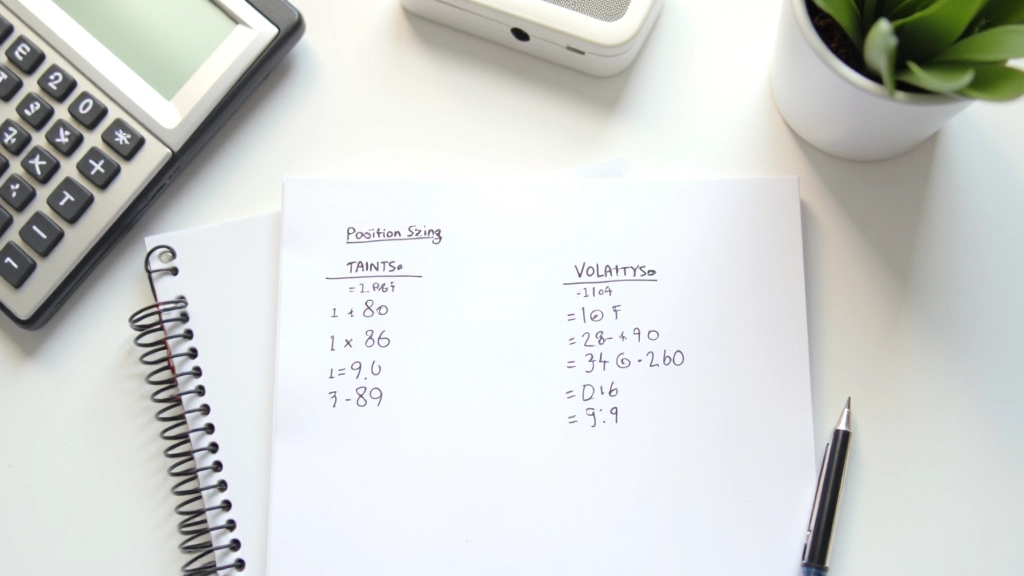
Here's what actually matters: You can't predict volatility spikes, but you can adjust your position sizing to handle them. If you know a stock's 30-day volatility is 22%, you should size your position so that even a 5% swing doesn't wipe out more than 1-2% of your total capital.

Educational Information
This article provides educational information about market volatility and how it affects trading positions. It is not financial advice, trading recommendations, or encouragement to trade. Market conditions vary significantly based on individual circumstances, risk tolerance, and market conditions. Always conduct your own research and consider consulting with a qualified financial advisor before making trading decisions. Past performance and theoretical examples don't guarantee future results.

The Volatility-Risk Connection
Here's something most beginners get wrong: they think risk is about the trade itself. It's not. Risk is about the position size you're taking in a volatile environment. You can have the best trade setup in the world, but if you're risking too much capital relative to volatility, you'll lose anyway.
Think of volatility as the speed at which your position moves. A £100,000 position in a calm market might move £500 per tick. In a volatile market, it's £2,000 per tick. Same position, same strategy — completely different emotional experience.
This is why professionals reduce position size when volatility increases. They're not scared — they're being practical. They know that the same profit target might take 3 days in normal conditions but only 45 minutes in a volatility spike. More price movement means faster gains and faster losses.
Managing Positions Through Volatility Changes
The key skill here is adjustment. You don't need to predict volatility — you need to respond to it. There are concrete ways to do this:
1
Monitor your position's daily potential move
Calculate what a 2-3% market move means for your specific position in pounds and pence. Update this daily.
2
Adjust stop-loss distances accordingly
In high volatility, don't put stops at the same distance. A wider stop in volatile conditions prevents whipsaw exits.
3
Reduce position size when volatility spikes
If 30-day volatility jumps from 15% to 28%, your risk profile has changed. Cut position size proportionally.
The Real Lesson About Volatility
Volatility isn't something to fear or ignore. It's a measurable characteristic of markets that you can learn to work with. The traders who succeed aren't the ones who predict volatility perfectly — they're the ones who respect it and adjust their positions accordingly.
Your job isn't to eliminate risk. That's impossible. Your job is to understand how volatility creates risk, then size your positions so that risk is manageable. When you do that consistently, you'll survive the inevitable volatility spikes. And survival is how you build long-term success in markets.
Start tracking volatility metrics for the instruments you trade. Write down the 30-day volatility every week. Notice how it changes. See how your positions respond to these changes. This real-world observation is where true understanding begins.